Things That Should Be Simple But Aren't
I write about complexity, organisational systems, decision-making, compliance, and the gap between how organisations are designed and how they actually operate.
“Change does not create problems. It exposes them.”
An observation that sits at the centre of much of my writing and thinking around organisations, systems, and complexity.
A perspective
How I think about organisations
Complexity doesn't arrive all at once. It accumulates through small decisions over time.
People don't resist change. They respond to uncertainty within systems they understand.
Simplicity is not the absence of complexity. It is the result of understanding it.
The thinking
Understanding how things actually work
Why things become complex
How systems, structure, and decision-making gradually create friction and confusion.
Why people experience things differently
How perception, psychology, and context shape behaviour inside organisations.
How systems can work better
Designing clarity into processes, responsibilities, compliance, and operational systems.
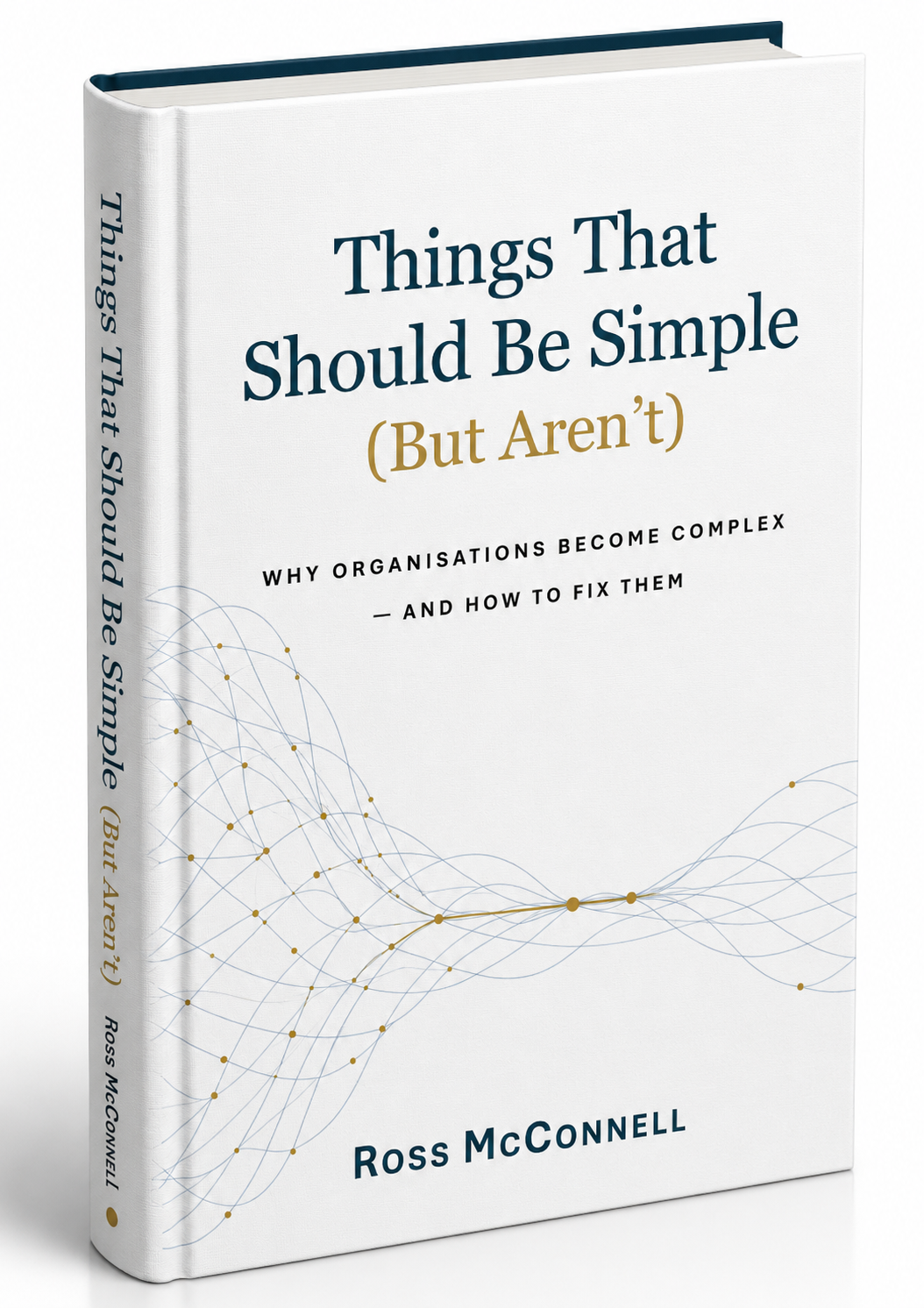
The book
Things That Should Be Simple (But Aren't)
This is not a book of quick fixes or management jargon. It is a way of thinking about how organisations become complicated — and how clarity can emerge by understanding systems more deeply.
This is part of an ongoing exploration into how organisations actually work.
Further explorations
Ideas currently being explored
The themes explored in Things That Should Be Simple are part of a broader exploration into complexity, behaviour, systems, perception, and organisational decision-making.
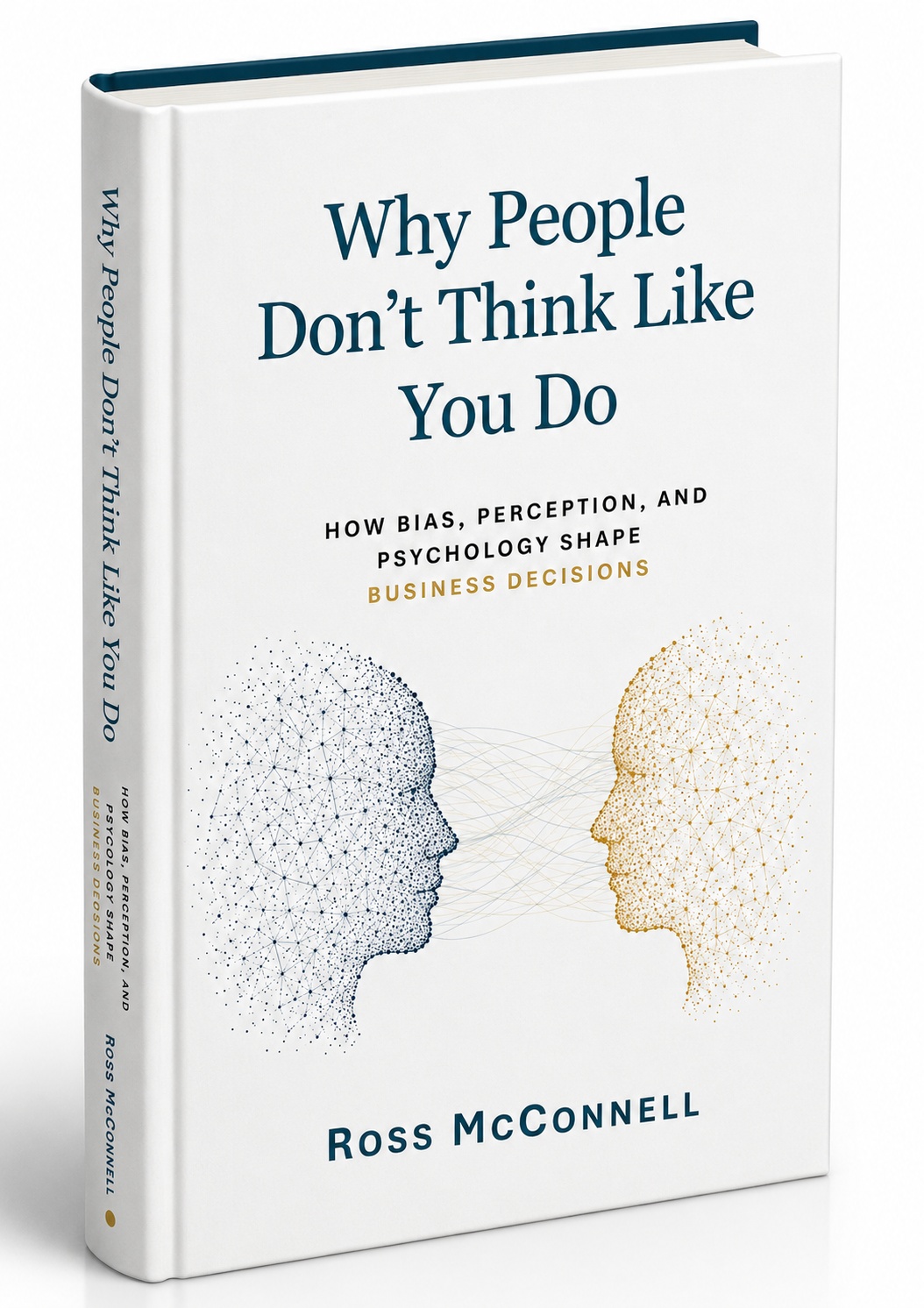
Exploration in progress
Why People Don't Think Like You Do
How bias, perception, and psychology shape business decisions
An exploration of how people interpret situations differently — and how perception, context, experience, and cognitive bias shape organisational behaviour and decision-making.
Part of an ongoing body of thinking around complexity, systems, and organisational clarity.
Continue the thinking
These ideas are shaped through conversation.
If you're seeing similar patterns, wrestling with similar problems, or simply interested in how organisations actually function beneath the surface, you're welcome to explore these ideas further.